
Welcome
Having joined the Rise board of trustees as Chair in September 2026, I’m delighted to provide a foreword to this impact report. In a short time, I’ve been struck by the breadth of the work Rise influences across the North East, bringing together and supporting organisations that make a difference to lives across the region.
These relationships are our greatest strength as an organisation – it’s through them that we catalyse the changes that people in the North East need. Our region has entrenched challenges that have come about over decades and turning this around is the work of many years yet to come.
I’m looking forward to working with the Rise board, staff and partners over the coming years so that we’re greater than the sum of our parts and that our communities enjoy a better quality of life through active wellbeing.
Mark Tweedie, Chair of Trustees
Sport defines our North East, it is central to our identity and our pride. Together with organisations such as Rise we are going to build on that sporting identity so that everyone can be physically active however suits them, and make sure all our neighbourhoods see the results.
This report shows what can be achieved when organisations across our region work together with a shared purpose. Myself and my office will continue to support, champion and promote the work Rise is doing to help to transform lives and create opportunities in every part of our
region.As North East Mayor, I believe devolution gives us a once-in-a-generation opportunity to unlock even greater impact. By bringing powers, investment and decision-making closer to the people and places we serve, working alongside partners like Rise, we can use our devolved powers to champion sport and physical activity as drivers of growth, wellbeing and opportunity.
The North East has a proud sporting heritage and some of the most passionate communities anywhere in the country. But the benefits of sport and moving more go beyond what happens on a pitch, court or track. They are a driver of economic growth and a way of ensuring everyone, regardless of background, has the chance to fulfil their potential.
Kim McGuinness, North East Mayor
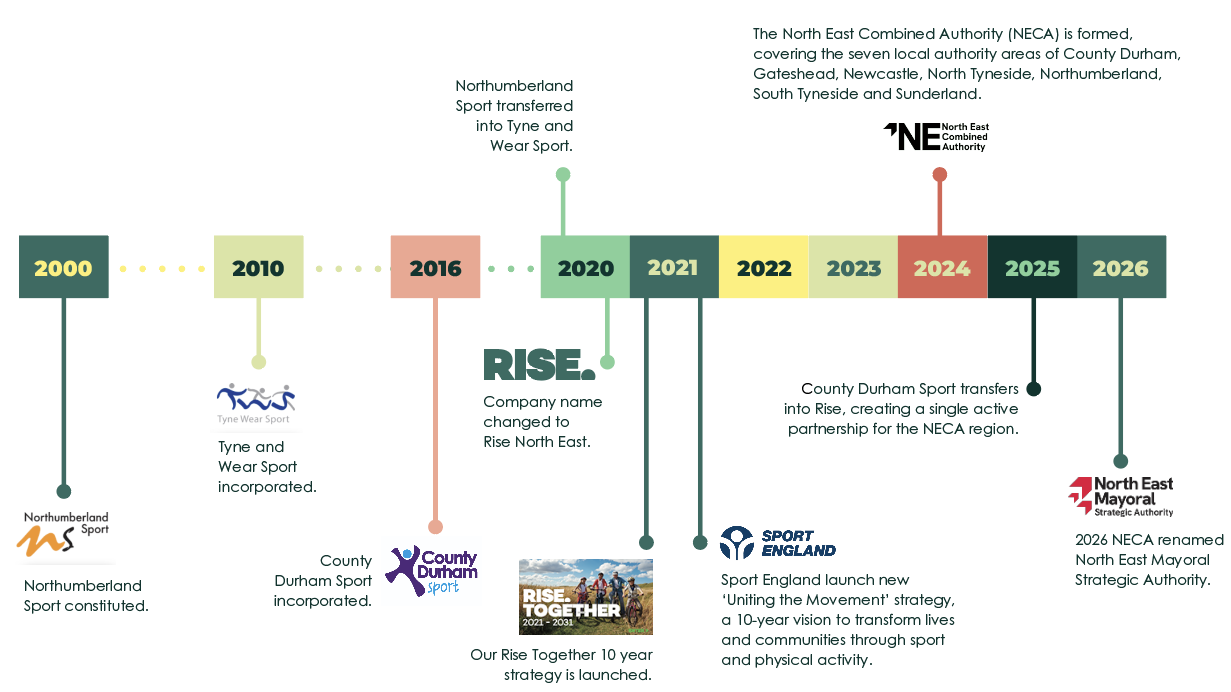
The last two years have seen perhaps the most significant changes in the history of our organisation. In April 2025 County Durham Sport transferred into Rise, creating a single active partnership for the region covered by the North East Combined Authority (now the North East Mayoral Strategic Authority), which formed in 2024.
This puts us in the unique position of being able to advocate for the transformative effect of movement in every area of life in the North East and our refreshed strategy, launched at the end of last year, gives us the focus to build on more than 20 years’ experience.
Movement and physical activity are unparalleled in their ability to benefit a wide range of societal issues, at scale and in a cost-effective manner. They improve individual health at every stage of life, thereby making workers and businesses more productive, children better able to learn, preventing illness and reducing strain on the NHS. They bring individuals and communities together, improving wellbeing, cohesion and our environment. The power of movement is clear and it’s our job to help create the conditions for those benefits to be felt by everyone.
I was struck by a quote by local author Dan Jackson in his excellent book The Northumbrians: “North East England is a place whose story has maybe been misunderstood, and its people underestimated.”
Therefore, despite some of the historic challenges for our region’s communities, by working with partners to collaborate in the interests of the region’s people, we can put that right.
We will Rise together.
Clare Morley, Chief Executive Officer
Every £1 invested in community sport and physical activity generates more than £4 in social value through improved health, wellbeing, productivity and stronger communities
What we do
We’re a leading health and wellbeing charity, and we’re passionate about the role that physical activity can play in making a positive difference to communities across North East England that need it most.
Our team of friendly experts work closely with regional partners across health, education, transport and more, to show how physical activity can tackle inequalities and help solve some of the biggest issues affecting our communities.
If physical activity were a drug, we would refer to it as a miracle cure, due to the great many illnesses it can prevent and help treat.
UK Chief Medical Officers
Why we do it
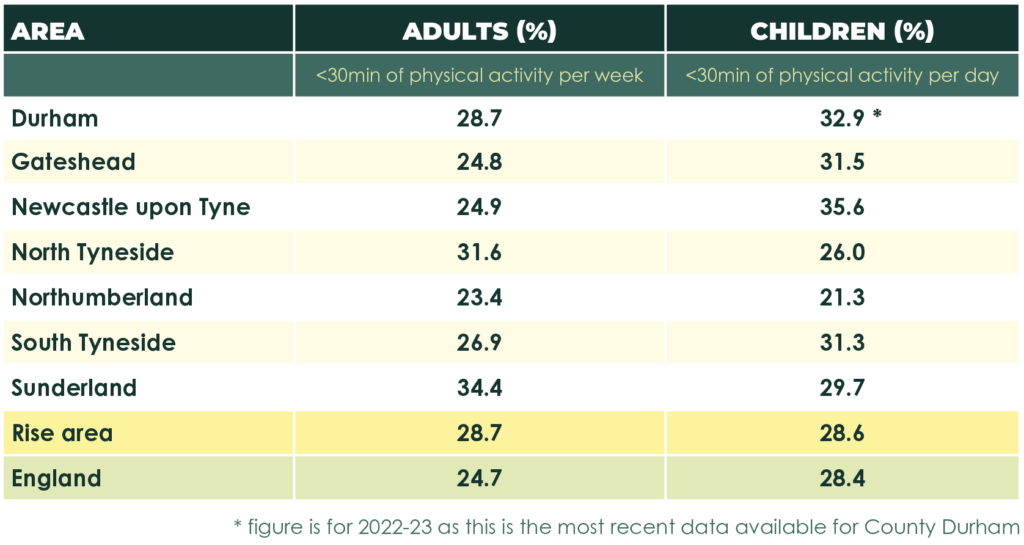
Our population in the North East of England lives with significant health, social, economic and environmental inequalities. We know that physically inactive populations are often the most marginalised and most likely to be adversely affected by inequalities.
There are large differences in rates of adult and child inactivity between different areas.
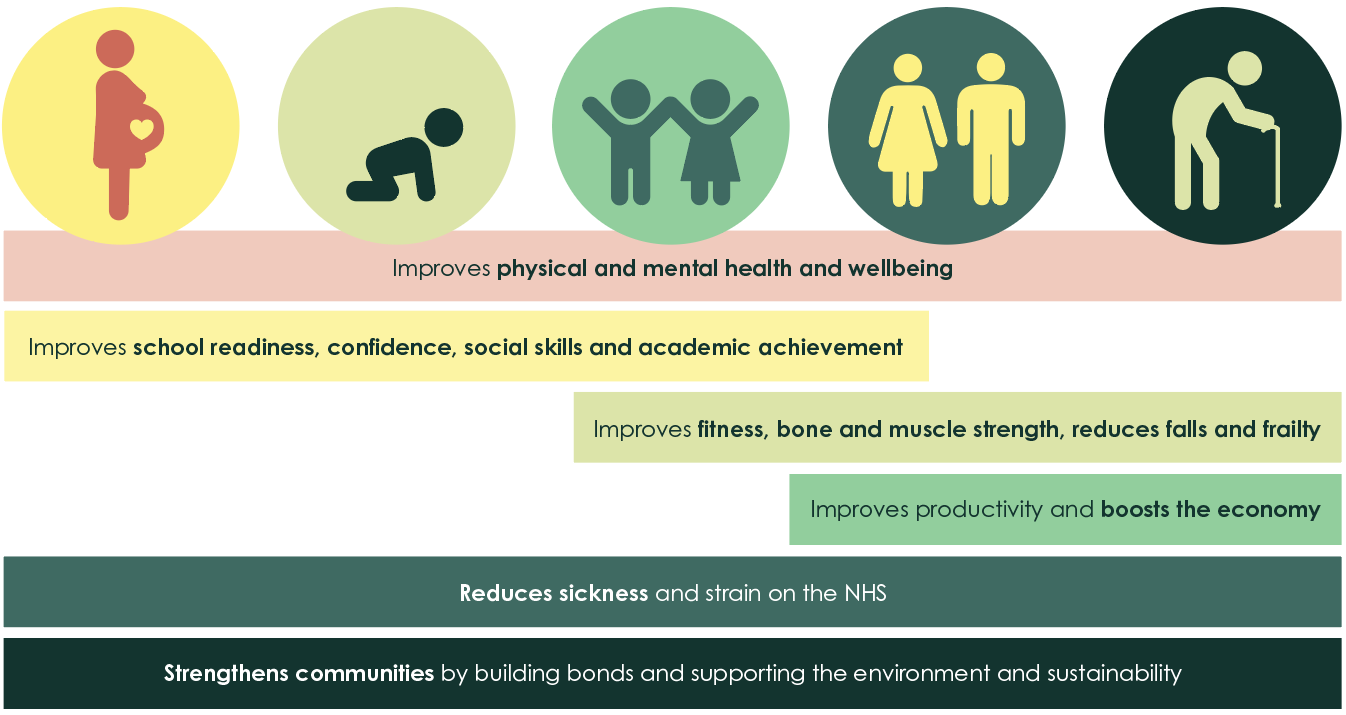
Movement improves every stage of life
From our first steps to our later years, movement and physical activity deliver lifelong benefits for health and wellbeing.
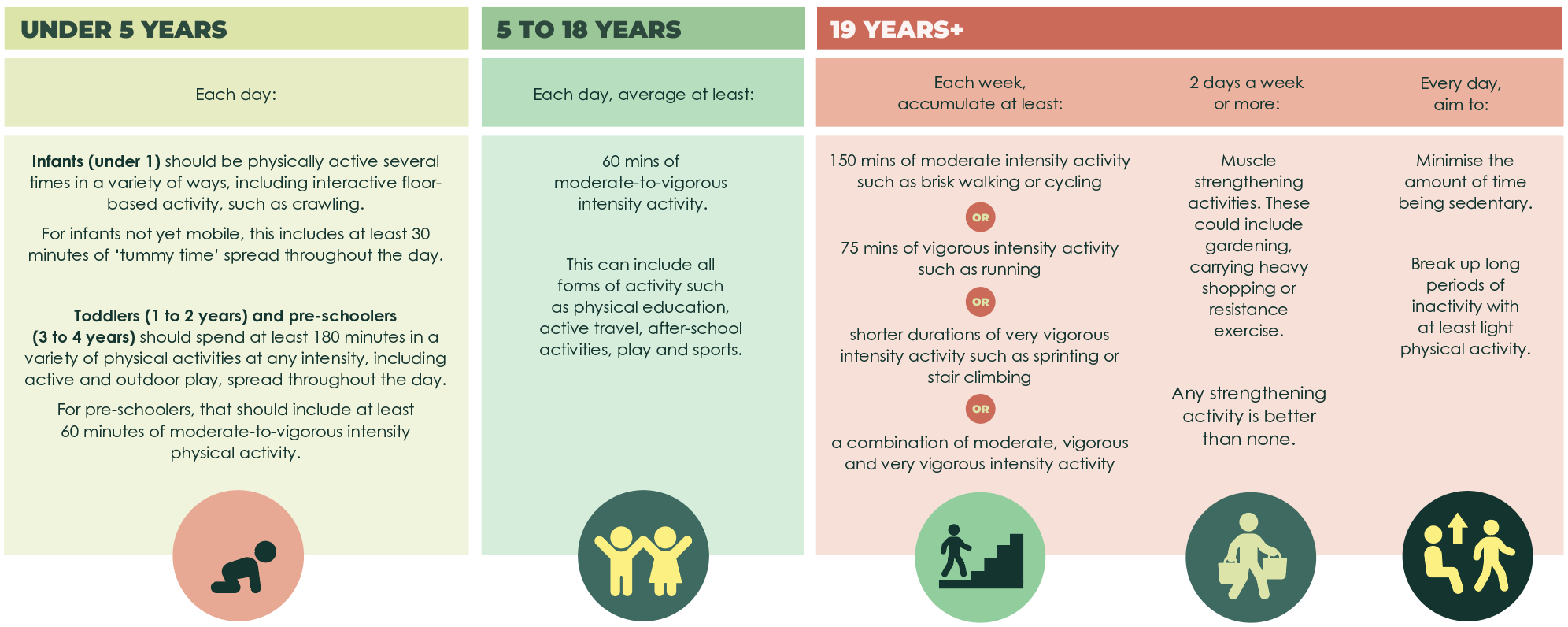
How to reach physical activity goals
For good physical and mental health, we should aim to be physically active every day. Any activity is better than none, and more is better still.
Timeline
Our strategy
Rise’s strategy is focused on using the power of movement and physical activity to improve quality of life across the North East region.
Our work centres on four key priorities: boosting economic growth, empowering healthier lives, reducing inequalities and strengthening communities, underpinned by a commitment to place, prevention and climate.
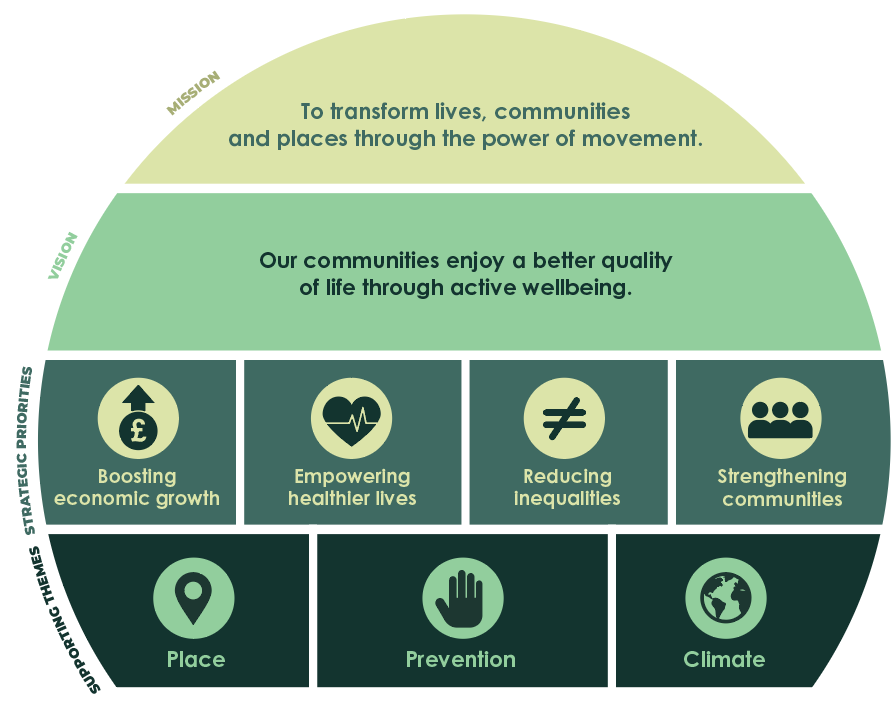
Together, these priorities guide how we work with partners and communities to create healthier, fairer and more sustainable places where people can thrive.
Our impact
We’re working in lots of different ways to achieve our key aim of transforming lives, communities and places through the power of movement, and this report highlights only some of the amazing work we are doing.
+79.4 Net Promoter Score from partners
If you’d like to read more stories about the impact of our work, take a look through our work webpages. Read on for a snapshot of what we’ve achieved this year.
Health integration
Physical activity can improve health outcomes, but this isn’t always widely known or used to full advantage. Reducing the huge strain on the NHS relies on improving clinician knowledge and patient experience to emphasise prevention rather than only treatment. This is a major focus of ours, including through two specific workstreams.
Every Move Matters
Every Move Matters is built on the principle that people are far more likely to make lasting improvements to their health when they understand why it matters, feel genuinely supported and have the confidence and capability to act.
Designed to move beyond traditional referral models, the role focuses on proactively prescribing ‘movement’ as a central component of health improvement and prevention. Strong collaboration with GPs enabled the proactive identification of physically inactive individuals with long-term conditions who wouldn’t typically engage with health promotion services. This is a clear shift away from traditional, referral-led models towards a more relational system of support.
GP-led engagement through warm introductions was consistently identified as a critical facilitator of participation, helping to reduce anxiety and increase confidence.
For older adults living with mild frailty, building understanding of how movement protects independence, reduces risk of falls and maintains quality of life can mean the difference between remaining at home and requiring residential care.
For working-age adults with obesity, understanding the relationship between physical activity and long-term condition management can prevent years of deteriorating health and economic exclusion.
Programme delivery was grounded in collaborative, person-centred practice aligned
with NICE guidance. Coaches and community delivery partners collaborated with participants to understand individual needs, barriers, motivations and goals, providing tailored support.
The programme was co-developed with partners and ongoing participant feedback, practitioner insight and evaluation findings were actively used to refine delivery.
Some of the key outcomes were as follows.
- At 12-month follow-up, 97% were more active than before and 98% reported lasting improvements in their confidence to be active.
- Inactivity levels decreased by 37%.
- Activity levels increased by 157%.
- 70% reduction in anxiety/depression.
- 48% reduction in pain.
- Cost per QALY (Quality-Adjusted Life Year) of £746 to £1,631 (weight management) – compared to the marginal NHS benchmark of £13,000.
- Cost per QALY (Quality-Adjusted Life Year) of £665 to £2,680 (frailty compared to the marginal NHS benchmark of £13,000.
- Average weight loss of 4.2kg and cost per kg of weight loss of £13.60 to £42.70.
- EQ-VAS (EuroQol Visual Analogue Scale – Quality of Life) average scores rose from 61 to 72 (statistically reliable and exceeds the minimally clinically important difference of about 5 points).
PACC training and community shadowing
Our partnership with Newcastle University successfully embedded physical Activity Clinical Champion (PACC) training into the Year 1 medical curriculum through a collaborative model. Academic teaching was complemented by optional, supervised engagement within community health programmes, enabling students to apply learning in real world settings and enhance their clinical competence, communication skills and empathy.
The model aligns with principles of socially accountable medical education and highlights the value of cross sector collaboration across primary care, community delivery partners and the voluntary sector. PACC training was completed by 501 students and subsequent community shadowing by 88.
Almost all participants progressed into the Next Steps maintenance programme, demonstrating that the programme succeeds in lasting behaviour change beyond the initial supported phase.
At baseline, students reported limited understanding of the Chief Medical Officers’ Physical Activity Guidelines and low confidence in promoting physical activity to patients. Following the PACC training there were significant gains in factual knowledge of the guidelines.
97% felt more confident promoting physical activity to patients after completing the training.
91% strongly agreed or agreed that the training would help them undertake their future healthcare role more effectively.
88% of those who took part in a shadowing opportunity were interested in accessing additional shadowing opportunities.
Qualitative feedback emphasised:
- students conceptualising their role not only as future clinicians but also as public health advocates
- the importance of tailoring interventions, fostering social connection and addressing social determinants of health person-centred, non-judgemental communication approaches and empathy
Evaluations are likely to underestimate the true value of prevention.
- Showing the cost effectiveness of preventative work is challenging. The costs are usually upfront, while the benefits often take years to emerge and may rely on assumptions rather than observable data.
- It can be hard to prove what outcomes are directly caused by an intervention, as behaviour change and health are influenced by many factors.
- Many benefits of prevention, such as improved wellbeing, independence, confidence and social connection are not easily captured in traditional models.
- Prevention activity spans healthcare, community, and voluntary sectors, and data is often fragmented across systems.
Reducing inactivity, improving health outcomes, and delivering system value depends on working with partners as equal contributors.
Future plans
- We’ll collaborate and integrate more deeply with primary care to support joint identification, proactive engagement, production and shared ownership of prevention goals.
- We’ll use formalised feedback loops to ensure services remain relevant, equitable and responsive to people and communities.
- Our delivery model will remain relationship based and locally adaptable, valuing hyper-local knowledge and trust building as essential assets.
The work was shortlisted for the Community Engagement Award, University Sector at the 2026 Education North Awards.
Running our Wellbeing MOT clinics highlighted the real value of bringing health promotion into community settings. Students were able to offer practical health checks, supportive conversations and appropriate signposting, while members of the public benefited from accessible, friendly health advice and provided very positive feedback about their experience.
For our students, the clinics fostered a strong sense of achievement, as they were able to contribute to health promotion within their local community. It was especially encouraging to see their confidence grow as they translated their learning into practice.
Dr Emer Kennedy, Clinical Teaching Fellow, School of Medicine, Newcastle University
Place-based working: Gateshead and South Tyneside
Some communities face much greater inequalities than others, and alongside partners we’re working to identify and support these communities using a place-based approach. The work is developed and led by the insights of the people who live there and the organisations who work there.
Sport England has committed to a transformative expansion of its place-based partnerships, with an investment of £250 million over five years to engage with 80 new places nationally. In September 2024, we successfully secured development award funding to separately invest in Gateshead and South Tyneside over an initial 18 month period.
Through working with partners, including but not limited to the local authorities, health, Violence Reduction Unit (VRU) and voluntary, community, faith and social enterprise (VCFSE) sector the funding develops a deeper understanding of the barriers that residents in priority localities face to becoming more physically active.
You can find reports and insight packs on our website about the work in Gateshead and South Tyneside. Here’s a snapshot of some of the work we’ve been doing and the impact that we’ve had.
With local partners in Gateshead, we’ve made good progress in building stronger relationships and developing a clearer shared understanding of how physical activity is shaped by wider issues such as poverty, transport, safety, housing, schools and local facilities.
A key achievement has been the growth of partnership working. More than 120 local partners have been engaged, and through the way we work we’ve brought together people from the council, health services, schools, leisure and voluntary and community organisations. This has helped partners share learning, identify gaps and begin shaping practical ideas for local action. Partners are increasingly thinking beyond short term activity projects and looking at the wider conditions that help or prevent people from being active. Creating a shared theory of change has helped clarify common goals.
However, due to the infancy of the programme a clear Gateshead-wide approach is still developing. Stronger shared leadership, better alignment with other local priorities and wider involvement in evaluation are still developing.
What’s been highlighted for me is that physical inactivity is more complex than just ‘we don’t have the resource’. There are other factors and that’s why it’s important to include housing and schools. Child poverty stuff should all be included in the discussion when it comes to physical inactivity, rather than just saying ‘we haven’t got a play park here’.
Partner from Gateshead Council
Work in South Tyneside has strengthened relationships between local partners and created new opportunities for joint action. It’s built on an existing culture of collaboration, bringing together organisations from the council, health services, VCFSE and other sectors. This has helped partners share ideas, make new connections and explore practical ways to support more people to be active.
A stronger local learning culture is also developing. Partners have gathered insight through interviews, reflection logs, workshops, roundtable discussions and small community-led research projects. This has helped build a clearer understanding of what supports or prevents physical activity in South Tyneside, including issues linked to children and young people, accessibility, green spaces, transport, falls, frailty and mental health. Trust and relationship-building have been important in helping community organisations and residents share their views.
Although great progress has been made, due to the nature of the work progress has not been even across the whole system. Smaller voluntary and community organisations may need different ways to be engaged, and more attention needs to be given to some key parts of the system, including planning and housing.
To build on the work of the last 12 months and address some of the challenges that have emerged, we’ll continue to work with partners.
What’s next in Gateshead?
- Reflect further on the potential actions that could help to align the place expansion work with other priorities in Gateshead such as health and Pride in Place.
- Revise the theory of change in relation to the findings of community insight gathering initiatives.
- Adapt the format of the system maturity evaluation (that supports places to understand where they are against the known conditions needed for systemic change) to make it more accessible for a wider range of partners.
- Develop a brand identity for the work so that partners speak with one voice and engage the whole community.
What’s next in South Tyneside?
- Develop the community of practice group.
- Explore opportunities to widen engagement with partners, including those from planning and housing.
- Revise the theory of change in relation to the findings of community insight gathering microcommissions and roundtable sessions.
- Hold conversations with relevant partners around linking the place expansion work to existing programmes aimed at tackling health-related economic inactivity.
- Adapt the format of the system maturity evaluation to make it more accessible for a wider range of partners.
- Develop a brand identity for the work so that partners speak with one voice and engage the whole community.
For each place separately, we’ll be submitting our applications for full award of Sport England funding in September 2026.
Durham
County Durham Sport was incorporated as an Active Partnership in 2016 and in 2025 transferred into Rise, creating a single active partnership for the North East Combined Authority (now North East Mayoral Strategic Authority).
We connect and support partners across County Durham by bringing strategic leadership, facilitation, insight and specialist expertise into key groups and programmes.
Launched in 2023, the Moving Together in County Durham Strategy aims for residents to be more active so that they live longer, healthier and happier lives. Achieving this depends on bringing people and organisations together to deliver change that supports increased physical activity levels.
Delivery of the strategy (and associated monitoring, evaluation and learning) are overseen by the Moving Together Steering Group (MTSG), with membership comprising representatives from health, local government and the third sector.
We’ve supported the development of the MTSG, the delivery of stakeholder mapping and bringing in new members where gaps have been identified. We’re also working with partners to build the capacity, capability and conditions required to implement a whole-system approach to physical activity across County Durham. Alongside this, we are supporting the development of a monitoring, evaluation and learning plan, so that discussions and decisions are informed by the lessons captured across the partnership.
We’ve worked to create clear links between the steering group and the work of the Place, Health and Communities Board to ensure the active environments agenda is embedded within the board’s priorities and reflected in its annual plan.
Our Children and Young People team has been strengthening relationships with partners across the county and used our programmes to help organisations recognise the importance and value of supporting young people to move more.
Berwick
We’re providing vital support to vulnerable young men in Berwick who face severe mental health challenges and multiple risk factors, while developing preventative community-based initiatives that address wider needs.
Collaboration and working with partners are the best way to change systems that aren’t working, setting them up to meet the needs of local people.
We’ve engaged with at least 75 stakeholders – exceeding the aims of 10 per year, and 50 over the 5 years of funding.
Here are some examples of how we’ve been working positively with partners
We held two theory of change workshops to clearly explain the key outcomes we are collectively working towards. These include:
- People in Berwick secure jobs, providing them greater financial stability and positivityfor their future
- Greater collaboration between community organisations, leading to better (more accessible) service provision for young people and carers
- Young people and carers are more active, healthier, and more engaged in their community
- Physical health and mental well-being of Berwick residents improve
- Peer support groups are established, making young people and carers more connected and less isolated
We coordinated The Berwick Conversation, an initiative to bring together partner organisations from across the Berwick community to address concerns about poor mental health and suicide, especially amongst young people. The conversation was designed to discuss a more coordinated, proactive community response to a series of suicides, suspected suicides and sudden deaths in recent years. We also wanted to address the ripple effect of these suicides and deaths within the community. Two meetings were held in November 2025, engaging 39 attendees from local and national statutory and voluntary organisations, and Berwick Town Council.
We’ve chaired a steering group of 9 organisations working to support young adults with neurodiversity to ensure that they are happy, healthy, and feel positive about the future.
We held a speed-dating style networking event for local organisations to learn more about the services and support available, and to identify potential opportunities for collaboration.
It took me out of my inactive comfort zone and helped me overcome the threshold fear of going to the sports centre. I live nearby but have not been in the building before but I feel like I’ll come back.
Netball taster session attendee
Direct support since funding began in May 2025
We’ve given 1-2-1 support for 39 men aged 16–30 years:
- 100% had improved or maintained a high level of confidence in making positive choices.
- 100% were more likely to say that they had hopes and dreams for the future.
We’ve delivered 2 of 5 employability courses:
- 86% improved or maintained positive confidence in securing a job within 4 months.
We’ve delivered 3 of 10 community activities:
- 86 residents engaged.
- 100% attendees report a positive response.
The course that was ran caused nothing but an increased positive outlook while providing valuable information that helps you grow as a person, ease into an employment environment and offer opportunities to people who are struggling to seize the opportunities themselves. The support given by the team running the course is amazing and the 1:1 level of communication they provide makes you feel like you’re interacting with a human who understands your situation and wants to support and help you.
Employability course attendee
Sourcing mental health support for clients
We have recently heard a comment from a service user that: “It is easier to get in contact with my drug dealer than it is a doctor.”
Mental health support is underfunded and under-resourced, meaning strain on the NHS and staff, long waiting lists and delays in people getting the vital support they need, and often the need to travel outside the area which isn’t always possible. In most cases, service users continue receiving support from our Key Worker until they can access other specialist support.
What’s next?
Here are some of the things we will be working on over the next six months.
- Establishing an effective steering group to address concerns about poor mental health and suicide, especially amongst young people.
- A ripple effect mapping workshop with our partner organisations.
- Working with local organisations to create youth, adult and female-specific wellness events to improve mental health awareness, highlight what support is available locally, and improve understanding of the barriers to wellness and physical activity.
- Working with the police and local organisations to tackle a rising county lines issue in Berwick.
- Continuing to advocate for young adults with SEND/neurodiversity through the Neurodiversity Steering Group.
Football Foundation, Mult-sport and PlayZones
Multi-sport and PlayZones engage with local communities across the country to create outstanding sports and activity spaces and tackle inequalities in participation.
The project aims to focus investment and resource into communities with the greatest need, delivering new or refurbished outdoor mini pitches designed for football and other sports and activities.
Our regional officer works with partners and communities across the North East, Tees Valley and Cumbria Active Partnerships to ensure that the location, design and activation meet their needs.
25+ Football Foundation facilities will be activated with the funding received: 11 PlayZones have already been constructed with six more awaiting a completion date. Another nine outdoor facilities will also receive funding and the number of applications continues to grow. Priorities include disability and family access and opportunities for new casual female sessions.
Challenges
- Disability needs pushing to the forefront of providers’ considerations for all work, it’s one of four main priorities for the multi-sport project, and should be planned for from the beginning. This has been a focus for our Strategic Fund projects and we have two strong applications from Northumberland FA and Family Gateway to support this.
- Anti-social behaviour continues to be a key consideration for some sites, particularly those that are located in public parks (for example, Ashington and Newcastle projects). Ashington had a particularly difficult start last summer, but a series of measures have been introduced to mitigate the disruption to activities, including plans to communicate about the work, target youth involvement and have a Safer Communities Team operate in the area.
It’s been great to have the PlayZone available to us. It’s a wonderful space for the local community to come and play football.
Connor Tynan, Newcastle United Foundation
What’s next?
- Roll out and support for 12 multi-sport projects over spring and summer 2026.
- Develop closer ties with place-focused teams in all regional Active Partnerships. Our two areas of work are converging and there is a swathe of community engagement we can utilise as a network. There are also opportunities to use a multi-fund approach with larger projects that serve different parts of the same community.
- Ensure a closer working relationship with the project’s independent evaluator to ensure the required quantity and quality of insight feedback is provided.
- Identify and support any existing or new opportunities for projects within the scope of Active Environments funding.
Kit Out Sunderland
Climate change can impact sport, but also sport can impact climate change. We’re in the unique, fortunate position to be an Active Partnership with members of staff dedicated to focusing on sustainability. As part of that, we’re undertaking our fourth year of the Investors in the Environment programme, working at Green level, meaning we’re looking at how we support sustainability externally, not just within our own internal operations.
In 2025, we led a piece of work to identify the challenges young people in our region face that make physical activity inaccessible. One of the main barriers is lack of appropriate clothing and footwear, particularly within areas of deprivation. At the same time, reusing kit reduces waste, supporting environmental sustainability.
Based on that insight, we engaged local and national organisations (Sunderland City Council and the Active Sunderland Board, the North East Mayoral Strategic Authority (MSA), StreetGames, Sported and Youth Sport Trust), and collaborated to co-design and co-create a Kit Out sports kit and activewear donation and recycling scheme pilot across Sunderland.
We collectively consulted with grassroots partners and recruited local businesses to support the programme by hosting a kit donation box. The specially designed boxes, made from sustainable materials, were placed in 18 sites across the city, including leisure centres, Sunderland football stadium, NHS sites and Nissan. We were overwhelmed with the interest and support we received, to the point that we had to create a waiting list for our phase 2 rollout.
A communications strategy was developed around two key messages:
- ‘Every child and young person has the right to play and be active’
- Reducing the environmental impact of discarded clothing’
These messages were used to encourage people to donate their unwanted items. We received some excellent media coverage from local newspapers, radio and television.
In just three weeks, Kit Out Sunderland collected 224kg of sports kit, activewear and footwear, which was distributed to 10 local VCSE organisations to support children, young people and families across the city to remove barriers to being physically active. Unusable items were sent to the local textile bank.
The innovative aspect of Kit Out was its co-design, reflective learning and feedback, and ability to collectively drive forward behaviour change at systemic level.
We achieved the following key aims
Tackling inequalities – by breaking down a key barrier to participation and enabling children and young people living in underserved communities to access clothing and to engage in physical activity.
Improving environmental sustainability – by reducing waste and diverting used clothes from landfill – supporting our Waste Management Plan.
Strengthening place-based partnership working – by bringing together partners in place to pool capacity, assets and resources – creating a sustainable and shared project.
The work also won ‘Best Waste Reduction’ at the national Investors in the Environment 2025 awards.
Poverty is a large barrier to movement and physical activity, and further investment is needed so that more children and young people can benefit from this kind of initiative.
What’s next?
We’re continuing conversations with stakeholders and considering ways to upscale and launch further Kit Out projects, linked to both inequalities and sustainability, as the model is needs-led and can be replicated in any local authority area or setting.
Step Outdoors and LEAP
Physical activity has proven positive effects on mental health and wellbeing. Active children sleep better, achieve more, are more able to self-regulate and have increased self-efficacy.
Fewer than half of school-aged children achieve the Chief Medical Officers’ recommendation of 60 active minutes a day and many don’t reach 30 minutes. With an inequalities lens, we codesigned two bespoke, needs-led programmes for schools tailored to their challenges and priorities, promoting physical activity, play and movement across the whole school day.
The initiative promotes equitable access to physical activity for children, young people, families and staff regardless of background. It supports sustainable change across schools by embedding outdoor learning into routines and curriculum.
The programme aims were to enhance the school experience to increase health and wellbeing, improve educational attainment, as well as family engagement and physical, social, communication and emotional development.
Step Outdoors
Step Outdoors, our co-designed early years initiative, targets school readiness and builds strong foundations for learning through child-led outdoor play and education for children, staff and families, in line with the early years foundation stage (EYFS) statutory framework.
The programme consists of:
- In-person teacher/staff CPD outdoor learning training
- Four stay and play sessions with parents/carers and teachers
- Resource packs
LEAP
LEAP (Learning Environments for Active People), our whole school approach, supports schools to create inclusive and diverse opportunities for movement across the school day.
The programme consists of:
- In-person teacher/staff CPD play and physical literacy training sessions
- A bespoke school visit for facilitated audit with youth voice sessions and staff consultation
- Staff and parent questionnaires
- A bespoke report identifying strengths and areas for development including relevant insight, suggestions and support to increase physical activity, active play, wellbeing and youth and family voice and engagement
They’re getting so much from being able to be outside. I am so surprised how focused they all are.
Teacher
Through these two programmes alone, this year we worked with 22 primary and SEND schools across Newcastle, Northumberland, North Tyneside and Sunderland: 1,917 children; 395 staff; 1,468 parents/carers
Impact
100% of staff agreed:
- they will use the ideas from the sessions in their practice
- the CPD training boosted their confidence, knowledge and inspiration around active outdoor play and learning
100% of parents/carers agreed:
- that their children enjoyed and benefited from the sessions
- they would use ideas gained from these sessions at home
Step Outdoors participants agreed that participating supported their children’s communication and language, movement, co-ordination and strength, confidence, cooperative behaviour and bonding, whilst offering opportunities to meet and play with others. Sessions provided ideas for free/low-cost inclusive outdoor play that parents felt confident to use.
Feedback identified that LEAP training has supported schools to develop active play, deliver workforce development and improve their health and wellbeing offer. These schools were clear that LEAP had a positive impact on the levels of physical activity across the school day, and that the CPD provided raised awareness of the importance of physical activity. All schools found their tailored reports helpful, with schools planning to make changes to increase their school’s play and physical activity opportunities, thus delivering long-term cultural shifts towards active, healthier school environments.
Challenges
- 100% of participants agreed that physical activity was incredibly important for children, only 22% of staff were aware of the Chief Medical Officers’ guidelines before starting the programme.
- Many of the schools want to continue to work with us but funding has now ended.
- Some schools found it difficult to fit in sessions or to be released from teaching to attend external training, due to everyday pressures in schools.
What’s next?
This work has created strong foundations for lasting systemic behaviour change in schools. We hope to be able to provide further regular follow-up visits to help schools implement their action plan priorities and feel supported every step of the way to do this. We’ve already started to expand and widen our reach with older children and young people, new local authority areas and new settings beyond schools, such as museums, libraries, family hubs and VCSE settings.
I love the lessons where you move a lot. It makes it 10 times better. When we don’t do that, I feel like jam stuck in a jar.
Child
Know Our Impact youth board
We were commissioned by the NHS North East and North Cumbria Integrated Care Board (ICB) Child Health and Wellbeing Network to manage and facilitate the Know Our Impact (KOI) Youth Board. It brings together young people from across the region to ensure their voices and lived experiences influence health and wellbeing priorities.
Building on their previous work as the Young Advisors, the Youth Board is highly active in local decision-making and gives young people a platform to share views on regional services and create inclusive and diverse opportunities to tackle health inequalities.
Alongside developing the board itself, we supported young people to shape regional campaigns, engage directly with senior professionals, and present at conferences and events.
We meet with the board online every two weeks and delivered in-person sessions during school holidays, creating opportunities to build relationships, develop personal skills and develop needs-led peer-to-peer projects.
Using the Lundy Model of Participation, we ensure young people have safe and meaningful opportunities to share their views and influence decisions that affect them and their peers. The board works closely with professionals including the ICB, Strategic Oversight Group, public health, education, local authorities and the North East Mayoral Strategic Authority (MSA).
Through a targeted recruitment campaign, membership increased from three to ten active members, expanding representation across the North East and North Cumbria and bringing new voices from a variety of ages and demographics. Some areas remain underrepresented and there is still work to do to ensure the board reflects the full diversity of communities across the region.
We’ve hosted 22 meetings, collectively engaging with 151 young people. This helped the board to deliver on a range of projects and themes from the North East MSA Child Poverty Action Plan, work experience, looked after children, and playing an active role in shaping the NHS Make It Better Campaign. Young people worked alongside the ICB from the outset to review the campaign to ensure it was accessible and engaging for young audiences.
When working with young people, participation must fit around education, exams, employment and personal commitments. This can make it difficult to maintain consistent attendance and engagement throughout the year, particularly during busy periods such as exam season.
A further challenge was navigating the ICB organisational restructure. This period of change created uncertainty around roles, priorities and lines of communication, making it important to ensure that the board’s voice remained valued and heard. Throughout this period, the young people demonstrated flexibility and resilience, adapting to changing circumstances while remaining committed to their role as regional youth representatives.
Results of our regular survey show KOI membership:
- is a positive experience and supportive
- enables participants to feel comfortable and safe giving their opinions, feeling everyone’s voice is heard and taken seriously
- fits with school and personal life
- has a positive impact on members’ communication, teamwork, negotiation and decision-making skills
Young people engage most effectively when they can see tangible outcomes from their involvement. We wanted to move beyond consultation work and have young people become active decision-makers, allowing them to shape their own work.
This led to their Fund Your Future, a youth social action small grants programme designed by young people, for young people. Board members created the branding, marketing, funding criteria and application process, reviewed applications and awarded funding to 13 youth and community projects. This ensured the work reflected the priorities of young people while developing members’ skills in organisation, negotiation, teamwork, decision-making, governance, monitoring and evaluation and accountability.
Plans for the year ahead
- The Youth Board will co-create a regional youth voice event. This event will create opportunities for young people to network, question and challenge professionals, share learning, ideas and collaborate on shared health and wellbeing priorities and strengthen the collective voice of young people across the region.
- We’ll continue to strengthen the geographical representation into areas that remain underrepresented.
- The Youth Board will continue to evaluate the impact of Fund Your Future and upscale it. Members will play a key role in co-designing and co-delivering a new Active Futures youth initiative promoting physical literacy, equity and wellbeing among young people through sport, movement and outdoor learning.
- We’ll continue working closely with ICB colleagues and wider to strengthen pathways for youth voice, ensuring the KOI Youth Board remains embedded within the organisation and that young people’s views continue to be at the heart of influencing strategic discussions and decision-making affecting young people.
Being a part of the KOI Youth Board is an amazing experience. Since joining, my confidence has significantly increased and that is all thanks to the amazing community we have. I was made to feel welcome from when I first joined and this means I am now open to share and discuss ideas with others. As well as this, being part of KOI gives me an immense sense of pride.
Youth board member
Sport Welfare
Physical activity, movement and sport must be for everyone. Our sport welfare officers work to make that a reality. They’re part of a network funded through Sport England by the National Lottery that support sports clubs and organisations to create safer, more inclusive and welcoming spaces.
Back to Sport campaign workshops
We supported sports clubs following the summer holidays with top tips and guidance for ensuring they had everything in place to return to sport safely, such as reviewing safeguarding policies and codes of conduct; ensuring DBS checks are in place for volunteers; and that everyone has received the relevant safeguarding training.
We also supported Welfare Officers and activity providers with workshops delivered locally to allow volunteers to connect and share ideas from across sports to create safer and more inclusive spaces.
North East Sport Welfare Event
We hosted our first event for sport volunteers across the North East, in collaboration with Tees Valley Sport. We welcomed over 100 attendees from 41 clubs and across 21 different sports so that volunteers could learn from sport welfare experts and connect with each other.
Workshops helped attendees further their knowledge in different topics and were delivered by local partner organisations including Newcastle Safeguarding Adults Board, Northumbria Police, GB Wheelchair Basketball, Durham FA and the Youth Council, North Yorkshire Sport, and Washington Mind.
Attendees also heard from inspirational keynote speakers Dion Riatt about abuse in elite sport, Durham FA and the Youth Voice Council about the importance of youth voice, and Pools Youth Ladies about neurodiversity inclusion in sport.
The event reinforced the importance of Safeguarding and Welfare in clubs and how important the role is to give everyone a safe, rewarding and enjoyable experience within sports clubs.
North East Sport Welfare Event attendee
Safeguarding children and adults
We engaged with the NSPCC Keeping Your Child Safe in Sport week by sharing helpful resources for parents and sport volunteers. We also organised a series of online workshops to support parents in delivering effective feedback to children; developing resilience and mental toughness; and understanding incel culture and the manosphere.
For Safeguarding Adults week, we engaged with our seven local authority Safeguarding Adults Boards who delivered training for our sport volunteers, shared resources, and encouraged clubs to raise awareness by holding themed ‘team talks’. We also focused on male mental health and worked with Andy’s Man Club to deliver a workshop on this topic.
Club support
We’ve continued to support sport and community clubs, and activity providers on a 1:1 basis. Here are some examples.
Berwick Amateur Rowing Club: Reviewing existing safeguarding policies and support with creating new welfare and safeguarding adults policies. Delivering training for volunteers, adult and junior members and for parents.
Leadgate Boxing Club: Supporting their affiliation to the national governing body, England Boxing, including ensuring that minimum standards were in place to help the club to operate safely. Working directly with the children and parents, codes of conduct were produced that are a cornerstone of the culture within the club.
Thompsons Bowls Club: Supporting the club and new members of the committee to review policies and procedures, developing their constitution, codes of conduct and children and adults safeguarding policies. This helped the club in their applications for various funding to develop their current facilities, purchase new inclusive equipment and develop appropriate marketing materials to try and promote the club around the area.
Gateway Wheelers: Helped the club ask British Cycling about DBS checks, training requirements and key roles, then supported them to update their safeguarding policies for children and adults. The work led to bespoke safeguarding training being organised for coaches and volunteers with different learning needs, and the Club Welfare Officer later shared the club’s inclusive, person-centred approach at our North East Sport Welfare Conference.
Dementia-friendly sessions: We worked with three national governing bodies (NGBs) to support the membership to consider how they can be more inclusive to members affected by dementia. This work will shape the support offer moving forward with other NGBs expressing an interest in learning from the sessions.
Find out more about Sport WelfareRise Workplace Wellbeing
Our Rise Workplace Wellbeing CPD-accredited e-learning offer, launched at the end of 2024, helps organisations support their employees’ mental, physical and emotional health. Strong evidence links supportive workplace wellbeing practices to improved staff engagement, reduced absenteeism and lower turnover – outcomes that benefit both individuals and the wider organisation.
This work matters now more than ever. With a 10-year gap between healthy life expectancy and retirement age, we’re fighting against a growing crisis: workforces that are getting older and sicker.
Over the last year we’ve continued to work with fantastic organisations to help them boost staff wellbeing and business productivity at the same time, including local authorities, education partners, the NHS and many SME organisations, with all income generated reinvested into our charitable work.
Our programme is easy to use and suitable for workers of all kinds and continues to grow in response to what businesses need, including the addition of our Menopause Toolkit for employers to help them navigate legislation that comes into force in 2027. We’ve continued to have a presence at conferences and business events across the North East building our brand and communicating our offer.
The e-learning programme has been an invaluable tool in supporting the emotional, social, and mental wellbeing of my 32 staff members.
Caroline Ash, Head Teacher, Dinnington First School
What’s next?
- We’ll continue to build on this momentum in the next financial year and grow our workplace wellbeing programme portfolio in this space with businesses and organisations across the North East.
- We’ll launch several new programmes including Movement Matters, reinforcing the benefits of moving more at work, and neurodiversity in the workplace.
- We’ll also launch our Workplace Wellbeing networking events for employers, with a programme of events including expert speakers planned for the rest of the year.
Sign up to our newsletter for all of our latest Rise Workplace Wellbeing news and events, or to find out how we can help your organisation, get in touch.
The e-learning module, Physical Activity in the Workplace for Managers, has been a great resource for supporting our managers to enable their staff to be physically active during the workday. It has significantly improved their confidence and understanding of the vital role physical activity and movement play in enhancing overall wellbeing for both them and their staff.
Laura Shields, Public Health Practitioner, Newcastle City Council
Celebrating the work that underpins our impact
To help us achieve all of this amazing work, so many different vital supporting elements are in place that cut across everything that we do. Here are some of them.
Equality, diversity and inclusion
We’re committed to equality, diversity and inclusion in all our work. Our goal is to have a workforce that thrives but is also representative of the communities we work with and for – so establishing a sense of belonging for our team and our partners.
Read our diversity and inclusion action plan.
Governance
Good governance keeps us on track and held to account. We are proud to be compliant with Sport England’s Code for Sports Governance at Tier 3, the highest level.
Read our governance statement.
Advocacy and communications
Advocacy is one of the three pillars of our organisational strategy. As part of this we supported the campaign to protect Sport England as a statutory consultee for applications to develop on grass playing pitches. We directly responded to the consultation, wrote to 19 local MPs to raise their awareness, and shared details of how grassroots community sports groups could sign the petition to prevent the removal of the protections that our playing pitches have from Sport England’s oversight.
Supporting our people
As part of our commitment to supporting the wellbeing of our staff and giving them the best chance to thrive, we operate a 4-day working week across our organisation.
+82.1 Net Promoter Score from staff
Find out how we’re making Rise a great place to work.
Research and insight
To make sure our work is effective and based on what our communities need, we have a dedicated research and insight team that works with Rise colleagues and external stakeholders. The team plans and undertakes research, insight, monitoring and evaluation to understand needs, support influencing and evaluate the impact of investments, interventions, partnerships, and provide evidence to funders.
Key developments this year
- Responding to Sport England’s additional System Partner reporting requirements.
- Developing reflective practice, with this now piloted in our place-based work and our work in Berwick.
- Ripple Effect Mapping training for the Research and Insight Team.
- Developing a new Research and Insight Plan to guide all our research, insight, monitoring and evaluation work.
As part of our commitment to learning and sharing, we provide a tool to help our partners understand the characteristics of our communities and challenges relating to tackling physical inactivity.
The Local Insights Tool is free and easy to use. It lets you look at national, local and neighbourhood level data for a wide range of topics, including demographic, education, income, health, housing, employment, crime, environmental and community insight.
The tool is made by Local Insight, a part of Oxford Consultants for Social Inclusion. Their help centre has lots of advice and guidance and our team are on hand to answer any questions, get in touch with our Strategic Lead for Research and Insight, Paul Biddle.
Funding
As a charity, we couldn’t do any of our amazing work transforming lives, places and communities across the North East without the support of our funders. Thank you to each and every one of them, both new and returning. We’re sincerely grateful for your support and the difference this continues to make to the people who need it most.